Gantrail GlideRail® System – Boom Hinge Short-Rail Solution
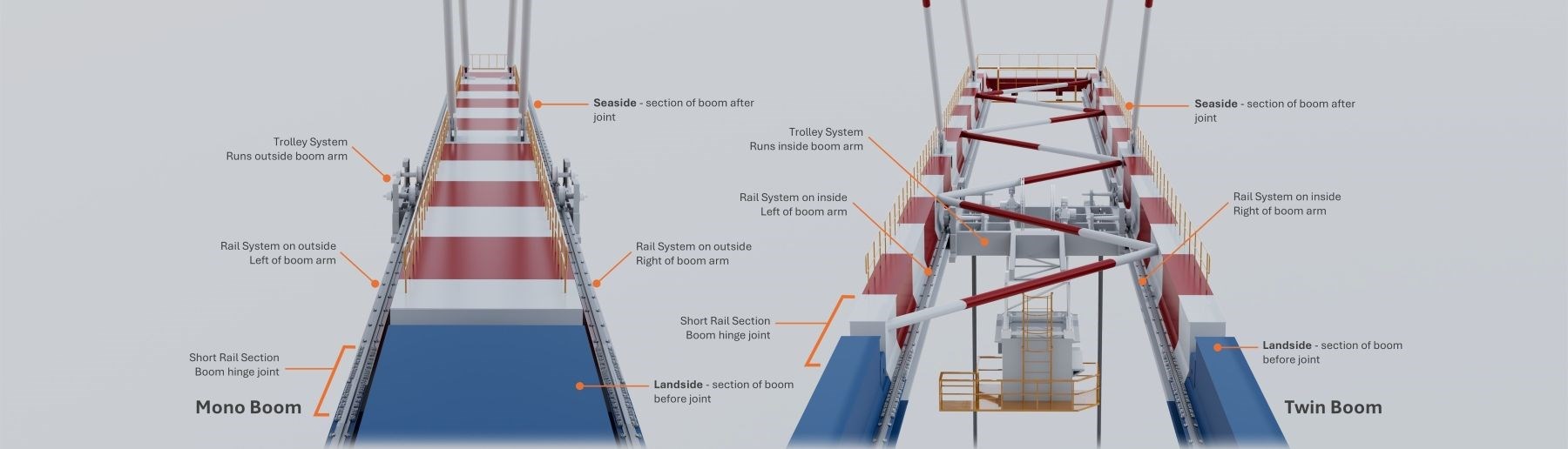
The Gantrail GlideRail® System is engineered to protect boom hinge rail joints on ship-to-shore (STS) cranes, where harsh operating conditions, impact loads and corrosive environments often lead to earlier system failure and operator discomfort caused by excessive noise and vibration.
What GlideRail® is designed to solve
Boom hinge joints are a known weak point in many OEM short-rail designs. Common failure modes include:
- Short-rail misalignment and rail movement
- Rail edge wear, delamination and damage around the joint
- Clamp loosening/bolt fatigue and clamp failures
- Increased vibration, noise and higher maintenance cost
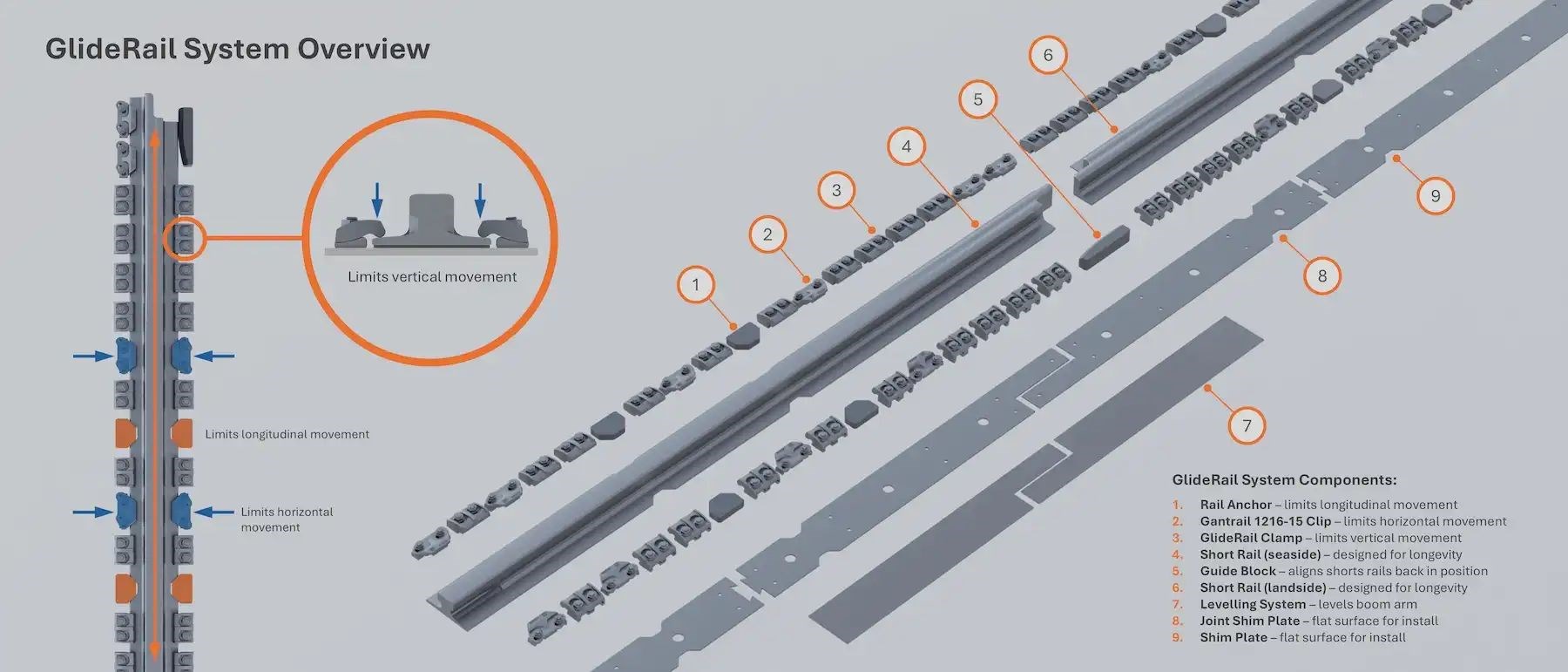
Gliderail system details
Gantrails GlideRail® system uses purpose-designed components that work together to create a smooth transition across the boom hinge joint, keeping short rails aligned and constrained in all directions. From the supporting surface upward: the levelling system (7) creates a solid platform to install the shim plates (8.9) in order to position the short rails (4.6). The clip & clamp bases (2.3) are then positioned & welded either side. Once the short rails are in place the 1216-15 clips (2) are used to align the rail horizontally, with the GlideRail® clamps (3) used to align the rails vertically, then the rail anchors (1) are welded in place to stop any longitudinal movement of the short rails. Lastly, the guide block (5) is welded in place at the boom hinge joint to help guide the seaside short rail back into position for when the boom arm is lowered.
The GlideRail® system short rails (4.6) are available in A75 & A100 profiles to match the existing in place crane rail.
Short rails section
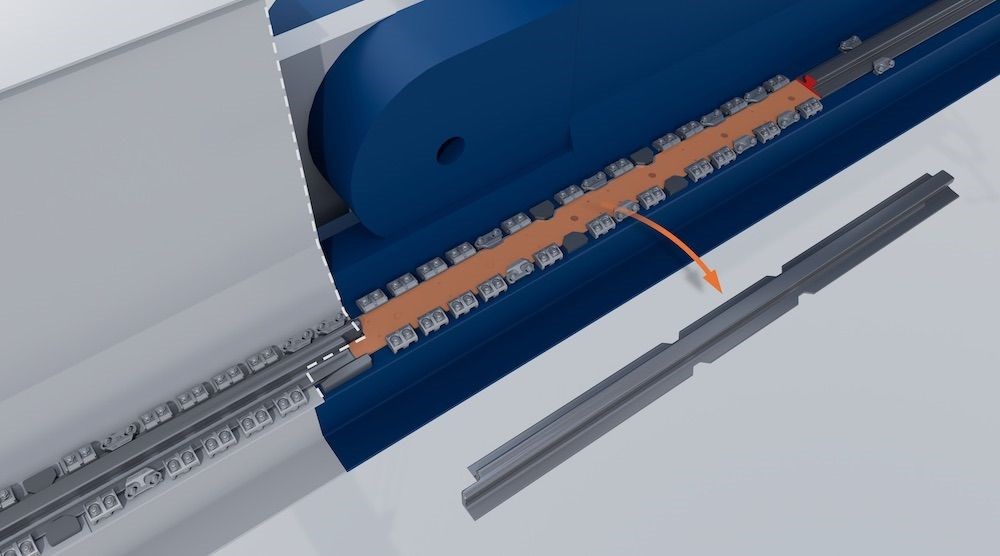
The short rail is a section of rail positioned either side of the boom hinge joint (landside, seaside).
Short rails come in a range of lengths welded to the end of the long rail and clamped into position in 3 directions to limit movement.
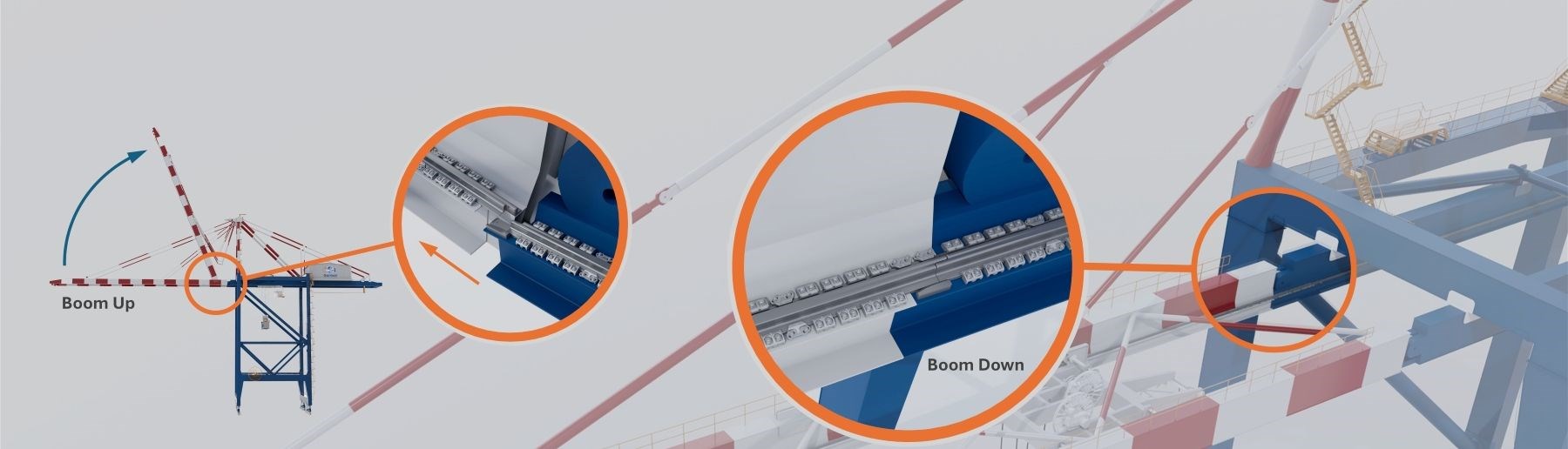
The staggered finger joint at one end is positioned directly inline with the staggered cut in the boom hinge joint.
This allows the GlideRail® system to move apart when the boom arm is raised for container ship docking.
Short rail wheel path
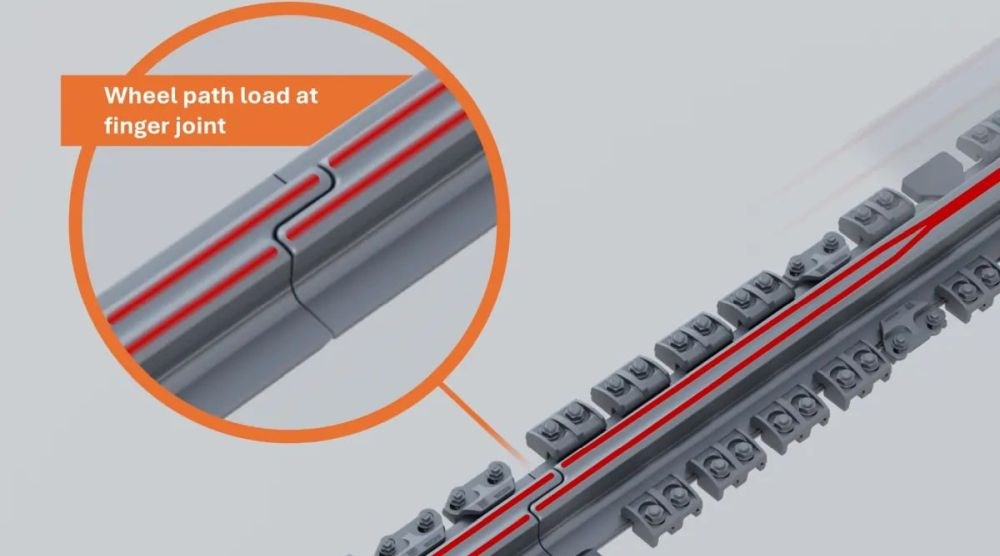
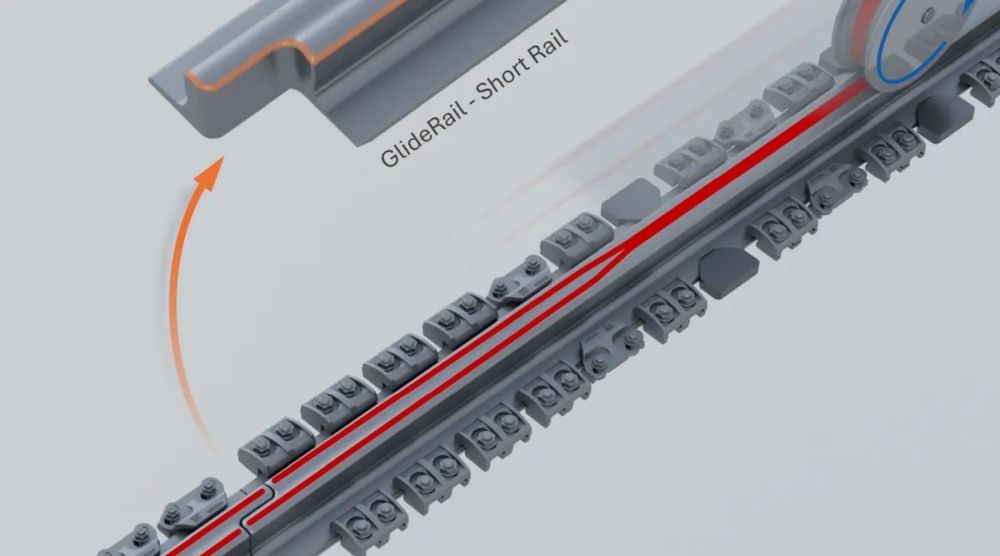
The wheel path has been designed to split the load & focus the stress on 2 points of contact, this reduces the need for maintenance & prolongs the life of the system.
The short rail is manufactured in 880 or 1080 grade material as standard rails allowing for ease of welding & comes in A75 & A100 profile designs
Short rail design details
The short rail profile is specially machined to reduce damage to the rail edge & around the L-shape joint, typically a problematic area for OEM boom hinge designs.
These core parts of the system help create a level running surface for the trolley wheel to operate smoothly time & time again and allow the specially design short rail profile to handle the load extending the life of the system.
Gliderail patented clamp
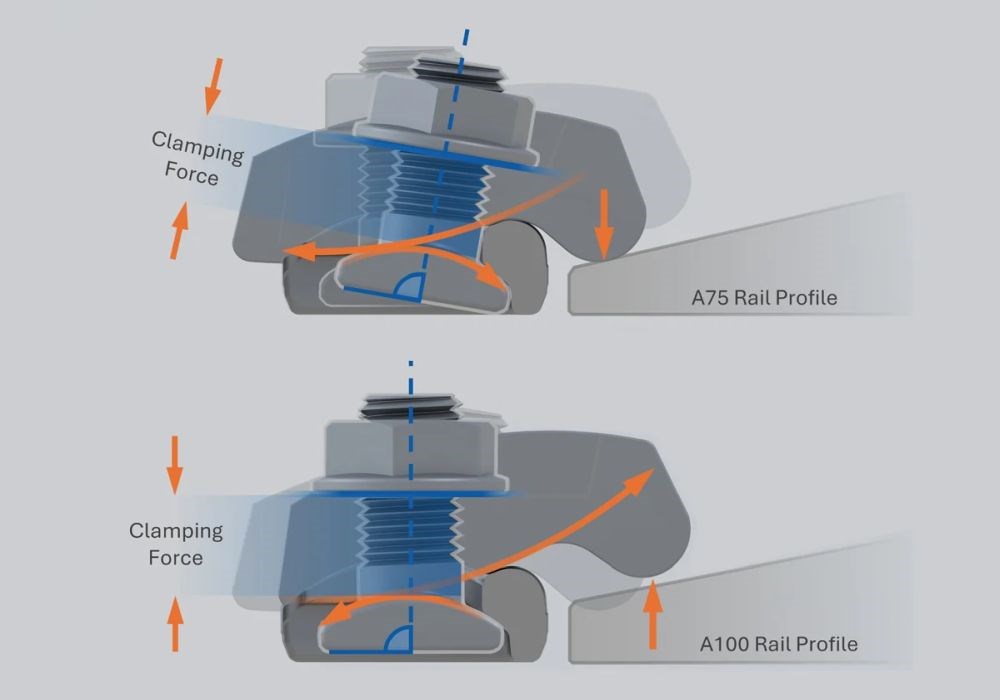
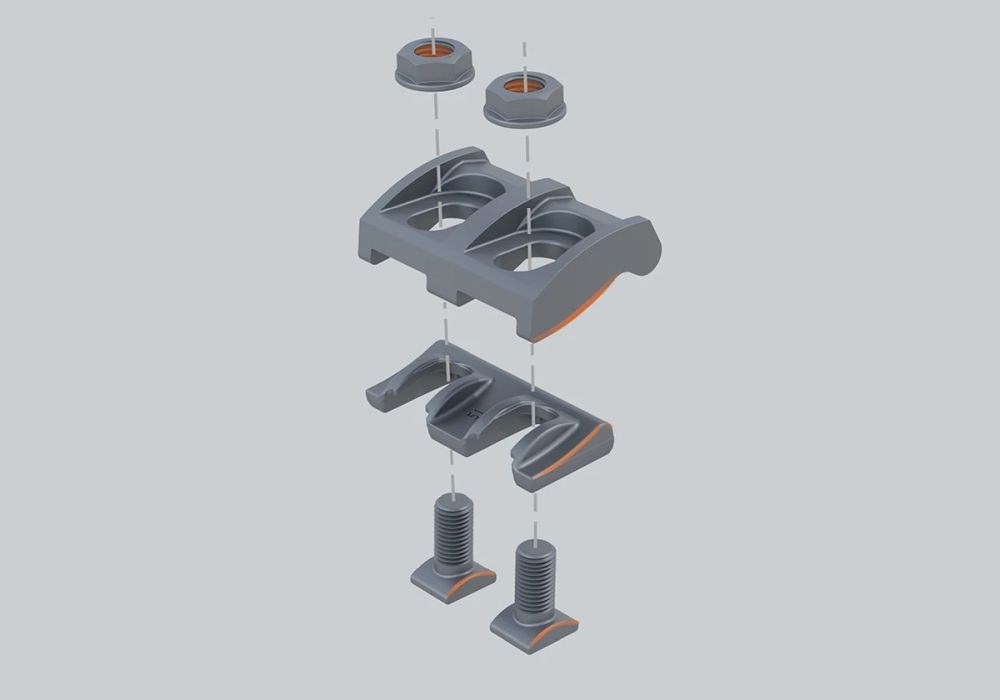
The GlideRail® clamp is specially designed around concentric movement, this allows for a large range of adjustment, a strong clamping force & limits bolt fatigue enabling longevity of the product’s lifespan.
Key Design Features:
- Concentric faces enable the cap to adjust for varying rail foot heights
- Large angled curved surface contact area improves clamp slip
- Downforce is generated by the concentric movement between cap & base
- Clamping force stays perpendicular to bolt alleviating bending stress leading to bolt failure on OEM clamps
- Concentric captive bolt rotates with cap to aid perpendicular movement for clamping
- Locking flange nut helps limit retightening occurrences
Clamp components
The GlideRail® clamp is specially designed to solve the current in market OEM system problems. Each key feature below combines to create part of the GlideRail® system solution.
Key Design Features:
- Locking flange nut – designed to reduce retightening
- Slot for adjustment – designed to aid height adjustment
- Concentric cap design - designed to work with concentric base for height adjustment
- Large curved & angled contact area - designed for larger surface coefficient
- Concentric base design – designed to work with concentric captive bolt to allow perpendicular movement
- Large curved contact area for clamping – larger curved surface area
- Concentric captive bolt – designed to move perpendicular with the clamping force reducing stress on the bolt
OEM system problems
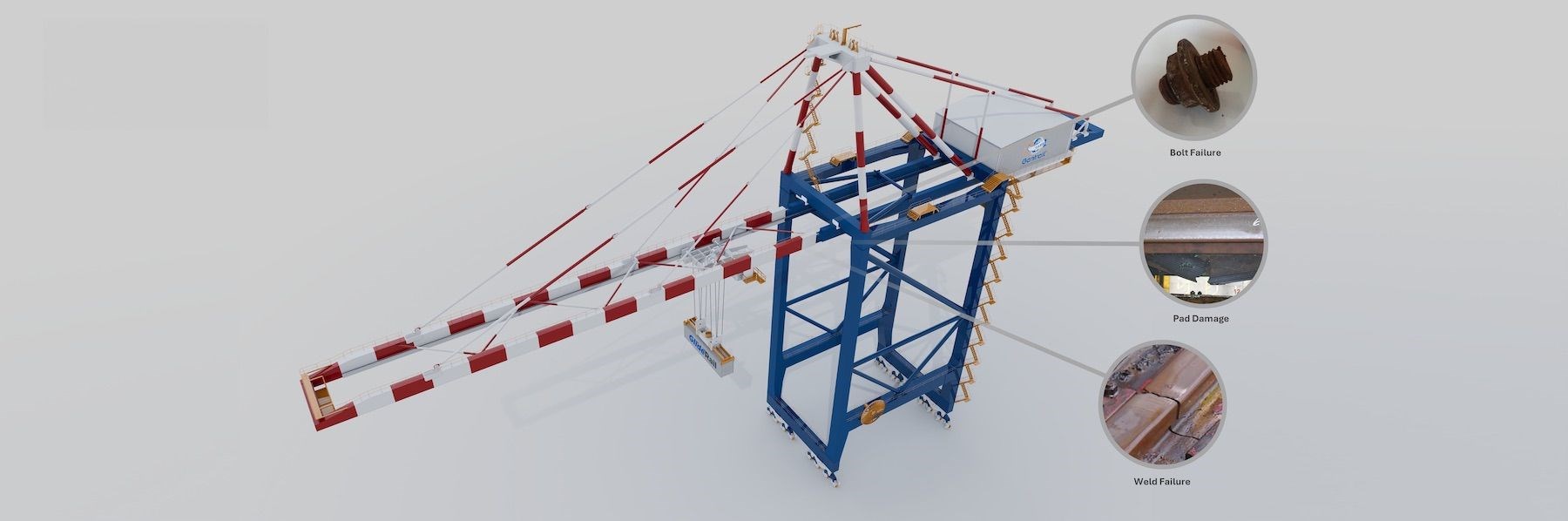
GlideRail® vs OEM System
GlideRail® Key Features:
- Specially designed holding system ensures the engineered split profile short rails stay aligned & in position to aid longevity of the product system
- The clamps specially designed concentric motion stays perpendicular to the bolt alleviating bending stress that leads to failure on OEM clamps
- The specially designed rail profile wheel path splits the load & focuses the stress on 2 centralised points of contact; this reduces the need for maintenance & prolongs the life of the system
OEM Key Failures:
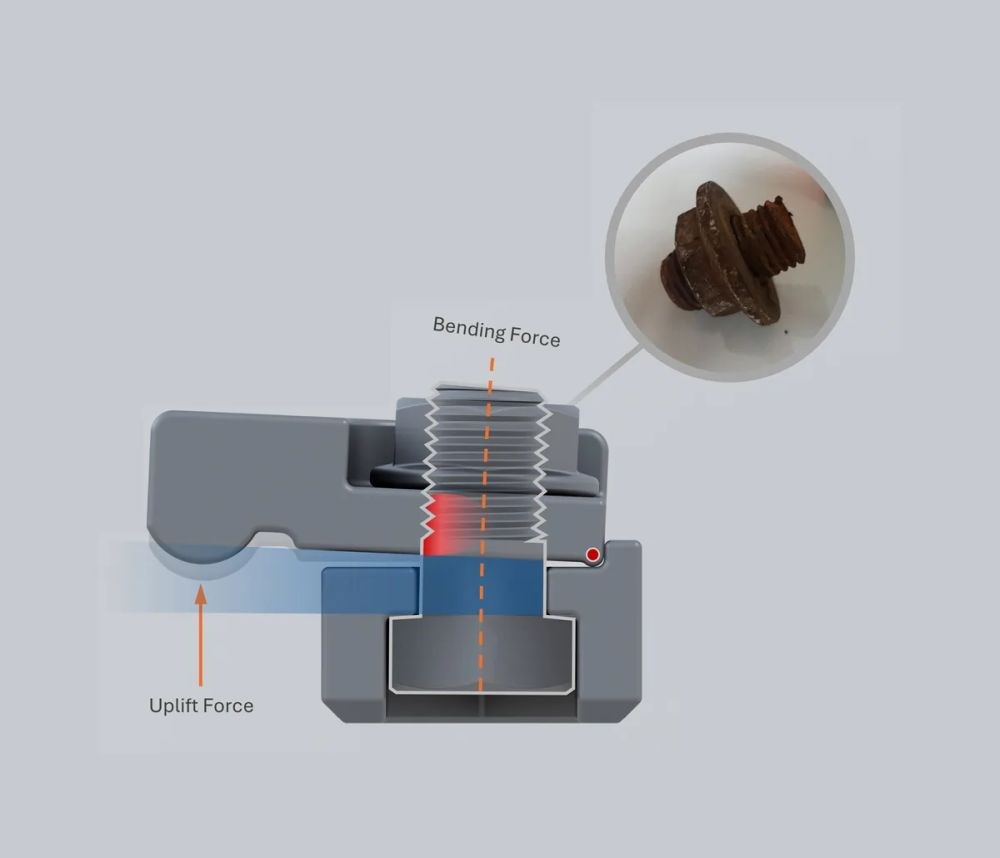
- OEM clamps allow a pivoting motion on the cap when an uplift force is applied; this results in a bending force on the bolt resulting in loosening, movement & vibration leading to bolt failure
- OEM short rail designs are typically simple joints that are open to edge wear, delamination & high vibration at the joint
- OEM short rails have a singular wheel path load that runs directly over the centre of the joint, that causes a stress concentration at the vulnerable edges resulting in high rate of wear & damage
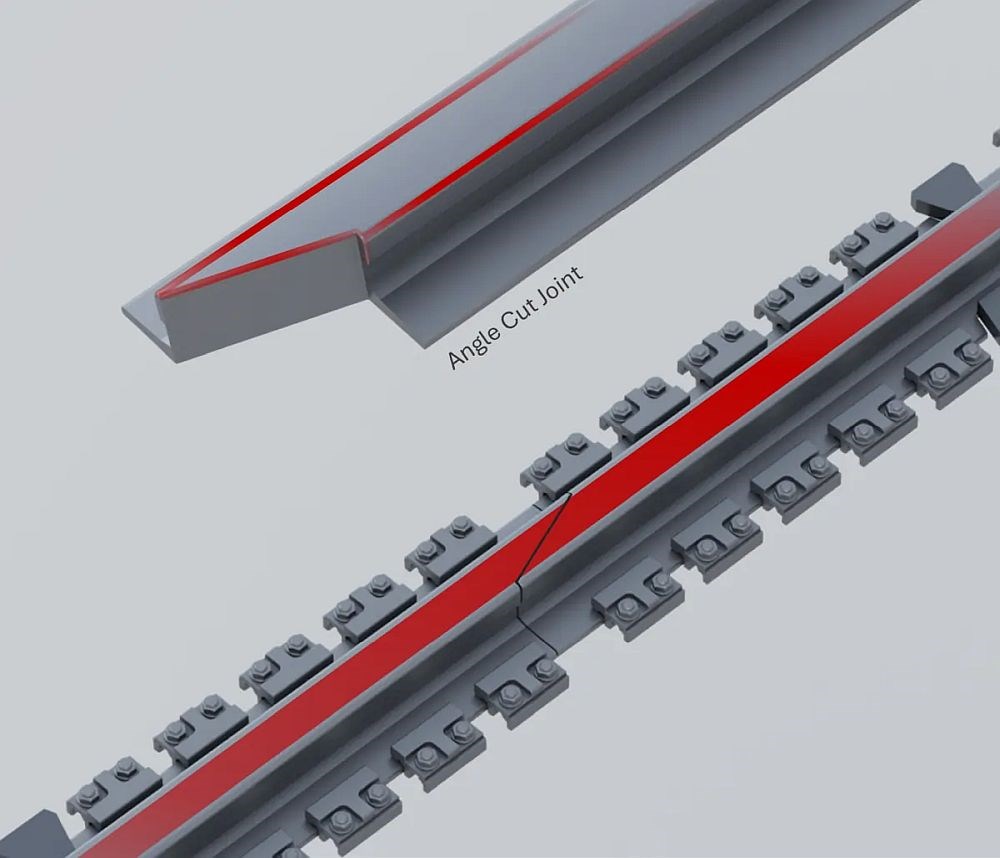
OEM Common Joint Problems: Angle OEM Joint
The angle cut short rails are one of the most common OEM boom hinge joints in market. The typical wheel path & load runs directly along the top of the rail over the boom hinge joint.
Common design problems:
- Edge wear at joint
- Delamination at joint
- High vibration at joint
- Damage to system/structure
- Driver discomfort
- High maintenance
- Higher costs
- Shorter lifespan
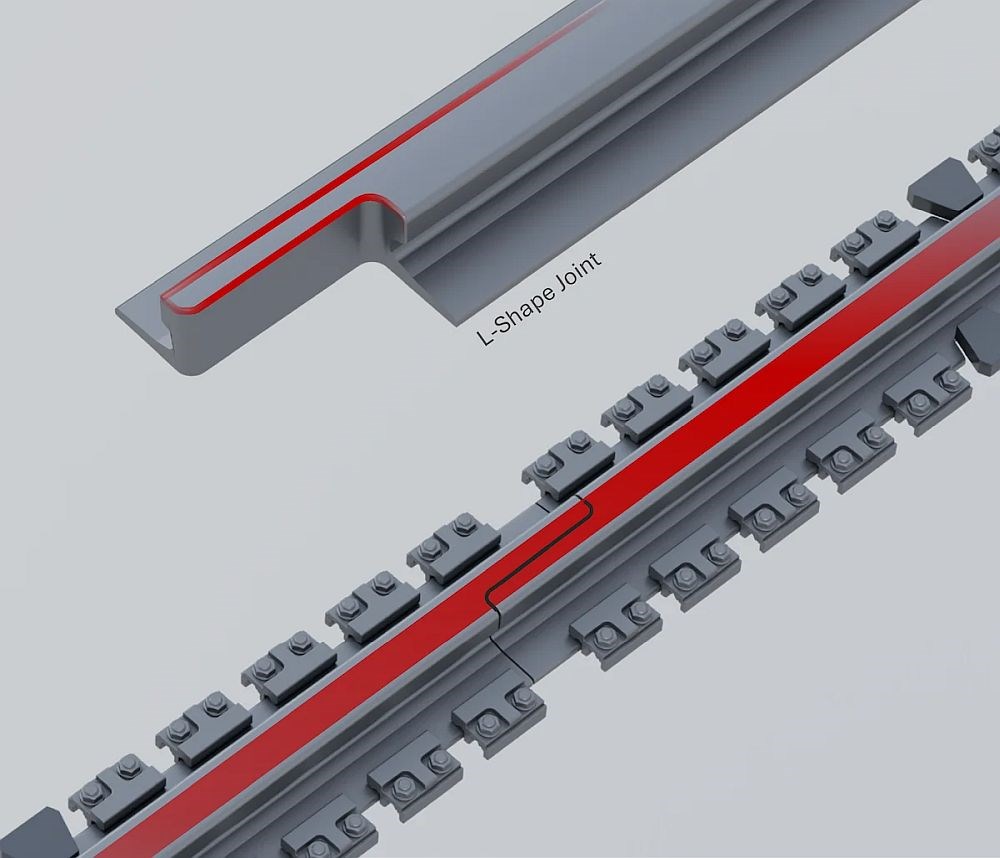
OEM Common Joint Problems: L-Shape OEM Joint
The L-shape short rails are one of the most common OEM boom hinge joints in market. The typical wheel path & load runs directly along the top of the rail over the boom hinge joint.
Common design problems:
- Edge wear at joint
- Delamination at joint
- High vibration at joint
- Damage to system/structure
- Driver discomfort
- High maintenance
- Higher costs
- Shorter lifespan
OEM Clamp Problems
The current in market clamp design typically operates by allowing a rotation at a pivot point, onto or up to a rail profile. This results in an impossible rotation of the nut as it attempts to stay parallel to the base resulting in applying a bending force to the bolt.
Over time bolts will loosen creating more movement & vibration throughout the system leading to full bolt failure & further structural damage.
Common design problems:
- Minimal height adjustment
- No horizontal adjustment
- Minimal surface contact (cap & base)
- Pivoting action leads to clamp failure
OEM Clamps
Common design problems:
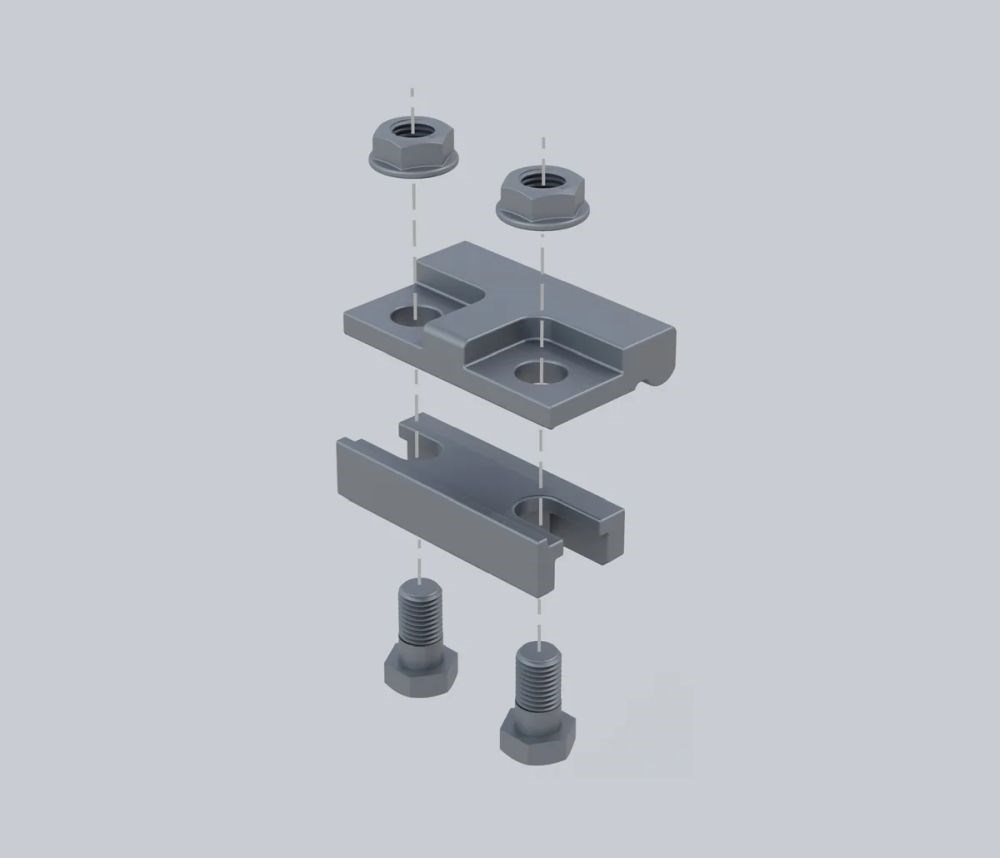
- Standard flange nut – no locking thread feature
- Through hole – no slot feature restricts adjustment
- Cap pivot point – generates bending stress on bolt
- Flat surface between cap & base – not always in contact
- Standard bolt – no locking thread feature